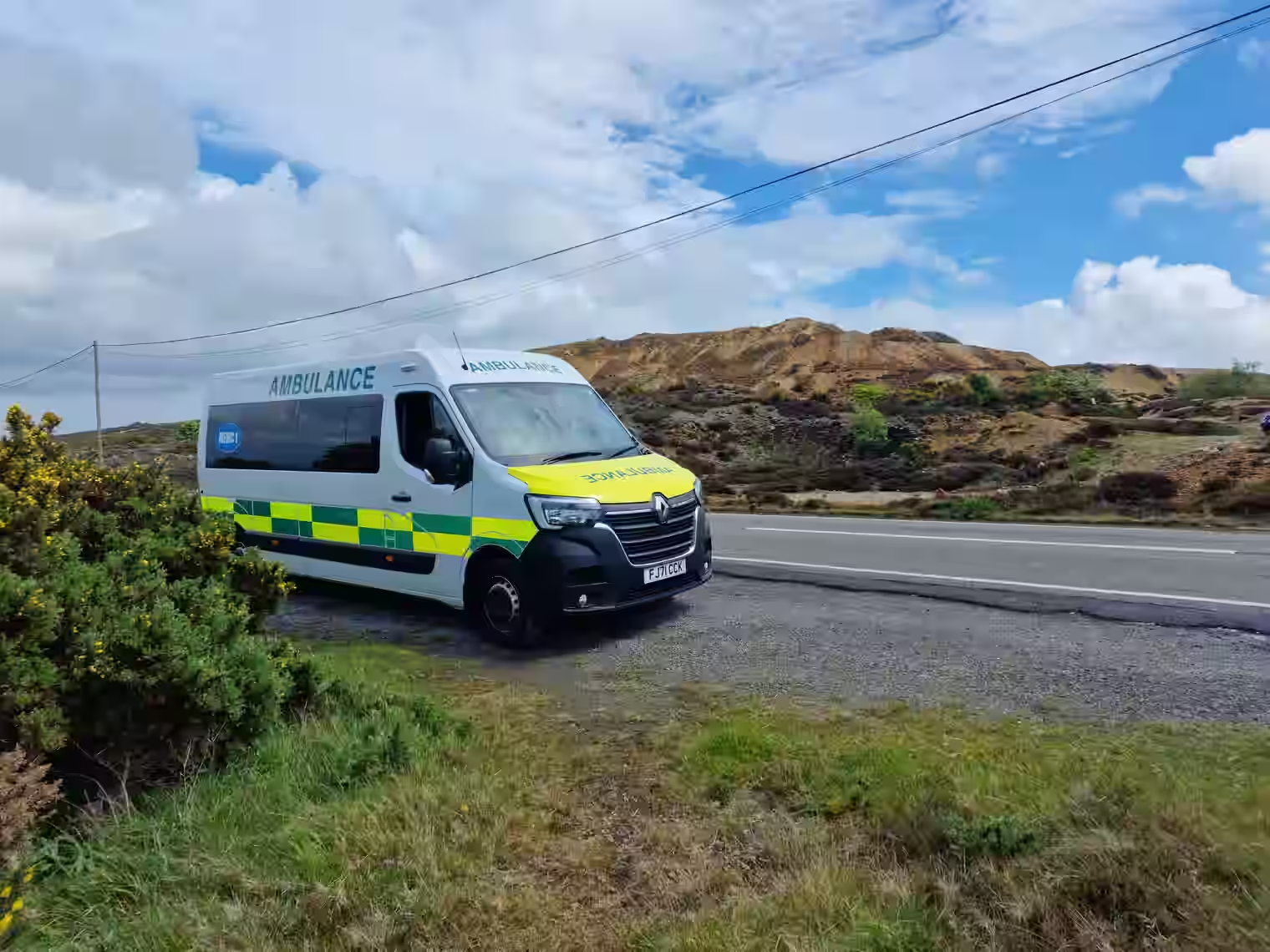
Mental health transport needs more than a vehicle. The person travelling may be anxious, distressed, reluctant to travel, subject to a legal framework or need extra support to complete the journey safely.
Medic 1 provides planned mental health transport for private clients, healthcare providers, local authorities and other organisations across North Wales and the UK. Every journey is assessed individually so the vehicle, staffing, approach and support match the person.
Our aim is transport that is safe, dignified and proportionate, using the least restrictive approach appropriate to the circumstances.
Individually Assessed Before Travel
No two mental health journeys are the same. A diagnosis alone doesn’t tell us how someone will respond to a journey, what support they need or what risks need managing.
Before transport, we consider:
- Current presentation
- Known risks or triggers
- Communication needs
- Previous transport difficulties
- Willingness to travel
- Relevant legal status or restrictions
- Level of observation needed
- Collection and destination
- Who else will be involved
- Physical health or mobility needs
- Potential for escalation en route
- Relevant history
Where appropriate, we gather more information from the referring professional before accepting the journey.

A Calm and Respectful Approach
How a journey is handled can greatly affect how distressing it becomes. Being rushed, confronted or surrounded by strangers can make things worse.
Our approach is built on clear communication, reassurance, patience and avoiding unnecessary confrontation — explaining what’s happening, allowing time, minimising stimulation and maintaining dignity. Where possible, we work with family, carers or professionals who know the person well.
The aim isn’t simply to complete the transfer — it’s to complete it as calmly, safely and respectfully as the circumstances allow.
Voluntary Mental Health Transport
Not every journey involves compulsory transport. Many people are willing to travel but need a more supportive environment than a taxi — because of anxiety, distress, confusion or difficulty with unfamiliar surroundings.
Destinations include:
- Mental health units
- Hospitals
- Assessment centres
- Community mental health services
- Supported accommodation
- Residential settings
- Family homes
- Healthcare appointments
- Other health or support destinations
Voluntary journeys still need care. Understanding someone’s anxieties, past experiences or concerns beforehand can make the transfer much easier.
Higher-Risk & Complex Journeys
Some journeys involve higher risk or need closer supervision. That doesn’t mean transport can’t be provided — but it must be assessed carefully, considering risks of absconding, self-harm or harm to others, agitation, substance use, known triggers, previous incidents, the need for extra staff or observation, physical health and escalation arrangements.
Where we can’t safely or appropriately provide a journey, we’ll say so clearly rather than accept it at the wrong level of provision.
Least Restrictive Transport
A mental health diagnosis shouldn’t automatically mean a more restrictive journey. We choose the least restrictive option that safely meets the person’s needs.
That may mean:
- A conventional vehicle with supportive staff
- A vehicle allowing closer supervision
- Additional staffing
- An ambulance where clinical support is also needed
- Other planned arrangements
Restriction should reflect the actual risks — balancing safety with dignity.
Physical Health & Clinical Support
Mental and physical health can’t be considered separately. The person may also have an injury, medical condition, mobility problem or recent treatment. We plan for these too — with an equipped ambulance and clinical crew (ECA, EMT, Paramedic or other clinician) where needed.
Particularly where the person:
- Has recently been treated in hospital
- Has taken medication or substances
- Has an injury
- Needs oxygen or monitoring
- Has complex medical needs
- Has reduced mobility or needs a stretcher
- May need clinical assessment en route
Their mental health needs stay central to the plan even when clinical ambulance transport is required.
Planned Admissions & Transfers
We provide transport for planned admissions and transfers involving mental health services — hospital to mental health unit and back, to supported accommodation, residential setting to assessment unit, inter-facility transfers, discharges, return journeys and transfers to specialist services.
Each journey is assessed before acceptance, and we work with referring and receiving organisations so risk and handover information is understood before we set off.
Discharge & Return Transport
Leaving a mental health unit or hospital is a significant transition. Someone may be ready for discharge but still need support to travel safely to home, family, supported living, residential services or another setting. We plan around their communication, behavioural, mobility and clinical needs.
Working With Healthcare & Support Teams
Good mental health transport depends on good information sharing. We work with NHS services, private providers, local authorities, supported living and residential services, care providers, community mental health and crisis teams, hospitals, assessment units, and families.
Private Mental Health Transport
Families can contact us directly when a relative is willing to travel but ordinary transport isn’t suitable because of distress, anxiety, behavioural or communication needs, or the need for trained support — for travel to a service, discharge, returning home, moving between settings or appointments.
We’ll talk through the circumstances carefully and advise whether our service is right.
Immediate danger or serious illness
If someone needs an emergency response because of immediate danger or serious illness, contact the emergency services on 999.
Long-Distance Mental Health Transport
Transfers aren’t always local — a specialist placement, a move closer to family or between distant facilities. We undertake long-distance mental health transport throughout Wales and the UK, planning duration, staffing, supervision, stops, communication, physical health, medication, triggers, escalation and handover. The same focus on dignity, safety and proportionality applies.
Confidentiality & Dignity
Mental health journeys involve highly sensitive information. We treat it confidentially and only share it for a legitimate reason. We recognise travelling in connection with mental health services can feel exposing, so we manage journeys to protect privacy and dignity. Some people simply need patience and reassurance; others need extra staff or a clinically equipped ambulance — we assess the person, not a one-size model.
Local knowledge, UK-wide transport
Based in North Wales, we provide planned mental health transport across the region and long-distance journeys throughout Wales and the UK — for individuals, families, healthcare providers, local authorities and other organisations.
Areas we cover across North Wales
- Anglesey
- Gwynedd
- Conwy
- Denbighshire
- Flintshire
- Wrexham
- Wales & the wider UK
Frequently asked questions
Can families book mental health transport directly?
Yes. Families can contact us when a relative is willing to travel but ordinary transport isn’t suitable. We’ll discuss the circumstances and advise whether our service is appropriate.
What does least restrictive transport mean?
We choose the least restrictive option that can safely meet the person’s needs — from a conventional vehicle with supportive staff to additional staffing or an ambulance where needed.
Can you provide clinical support during a mental health transfer?
Yes. Where physical health needs require it, we provide an equipped ambulance with an ECA, EMT, Paramedic or other appropriate clinician.
Do you carry out long-distance mental health transfers?
Yes, throughout Wales and the UK, with planning for staffing, supervision, stops, medication, escalation and handover.
Arrange Mental Health Transport
Individually assessed mental health transport for voluntary, supported and more complex planned journeys — with physical health needs, clinical support and long-distance travel considered as part of the same journey.
Book NowSafe transport. Respectful care. The least restrictive appropriate approach.
